

Traditional electric heaters rely on exposed elements or resistors (think of the glowing red wires inside a toaster). They’re simple, inexpensive, and with fewer moving parts, have served the sauna world well for decades.
But the global sauna boom has opened the door for fresh ideas beyond the Nordics. Which leads to the question: what does an electric sauna heater with protected elements look like?
To the casual bather, there’s little difference between a heater with exposed elements and one with protected ones—the rocks look the same. But anyone who’s ever “stoned” a new heater knows the struggle. With traditional designs, it’s a tedious game of Tetris, wedging rocks one by one around delicate elements. With protected designs, you simply pour the stones into the channel between the steel housing and the mesh. It’s faster, cleaner, and more durable.
Some manufacturers, like Huum, have introduced add-ons such as “steam tunnels” to shield elements. Whether these are reactionary fixes to premature failures or a genuine nod to the future, they still fall short if the housing warps, bends, or breaks. The real leap forward lies in purpose-built engineering.
Brands like EOS and Kuuma already embrace this philosophy. Their heaters, like wood-burning stoves, position elements below the rock mass so heat rises naturally through the stones—thermodynamics working as intended.
Advantages of Protected Elements
1. Clean Steam
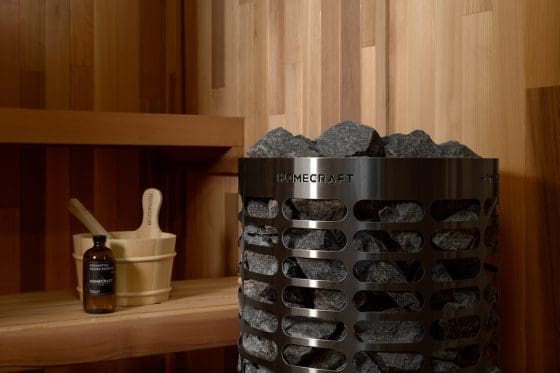
Fans of continuous wood-fired or smoke saunas know the feel of puhtaat löylyt —clean, soft steam. With exposed elements, even a splash of water can hit the red hot resistors and produce “scorchy steam”—harsh, industrial, and off-putting or at minimum an electricity burn smell. Protected elements, water not hitting elements, results in smoother, gentler steam. Ask anyone who has tossed water on a Homecraft Revive or Apex and they’ll tell you: the difference is real.
2. Rock Recovery
Direct contact with elements was once thought necessary to heat rocks quickly. But in practice, heaters with protected elements still deliver strong recovery. Conductive heat from the housing plus convective airflow through the heater combine to keep rocks hot and recover fast after water is tossed. In testing (and real-world experience with Kuuma’s reengineered electric heaters), you can pour round after round of water, and the rocks never seem to “die.”

3. Element Longevity
This one is obvious: elements last longer when they aren’t exposed to water. That’s why gyms, hotels, and health clubs across North America post “Do Not Throw Water” signs above their heaters. After replacing rocks and elements one too many times, maintenance crews and accountants alike have had enough. Meanwhile, in European spas running EOS heaters daily, breakdowns are rare and “Out of Order” signs practically don’t exist.
And yes—dumping chlorinated pool water on sauna rocks will destroy elements quickly. Unfortunately, not every bather knows better.

Looking Ahead
Like the Nokia flip phone, conventional heaters with rocks packed around exposed elements still work. But protected-element designs are proving to be the iPhone of sauna heaters: more durable, more user-friendly, and better aligned with how saunas are actually used today.
3 thoughts on “Protected Elements: The Next Step in Electric Sauna Heaters”
I love my Kuuma medium wood burning stove, and
I’m on the market for an electric sauna heater; I prefer to buy American products. I’m drawn to the Scandia brand (protected elements) but don’t see them included in reviews, except a piece by “Trumpkin” claiming that Scandia and Kuuma aren’t really sauna heaters because of what he calls harsh radiant heat. I don’t see any science behind his claims and disagree… looks like preferences to me. But wonder if you have thoughts on Scandia specifically, and Trumpkins arguments generally.
Given that you love your Kuuma (and so do all the others who own and use one, including me), and Walker Trumpkin claims that this brand “isn’t really a sauna heater..” Well, that’s all you need to know about Walker Trumpkin. Misguided at best. And given this misleading claim, it’s hard to take any of his other talk as accurate, when he’s so off base with this one. You’re spot on. No science. Just fuzzy logic.
I hear you on preferring to buy N. American products. The margin stacking and cost engineering from Baltic imports being shipped over here is evidenced by how much (less) they cost in their home and native land.
For your electric sauna heater, as of this writing, the Kuuma electric is not yet UL certified, but we’ll keep our seat belts on. It’s a serious kick ass electric sauna heater.
I have sat on the bench, several benches, with saunas heated by all the major different electric heater brands. I suggest clicking here, and filling out your address with the Homecraft of your choice, and it’ll come to you straight from their factory. Great people making great products, at a fair price. That’s what is on your way to you, and i’m 100% confident you’ll thank for me for the straight talk – and fantastic heat and “clean steam” based on my extensive experience, which i’m pleased to share with you. Sans dogma.
size & location of the intake vent for circulation of air…to the exhaust vent size and shape & location of it.